
Michael Rose · Free
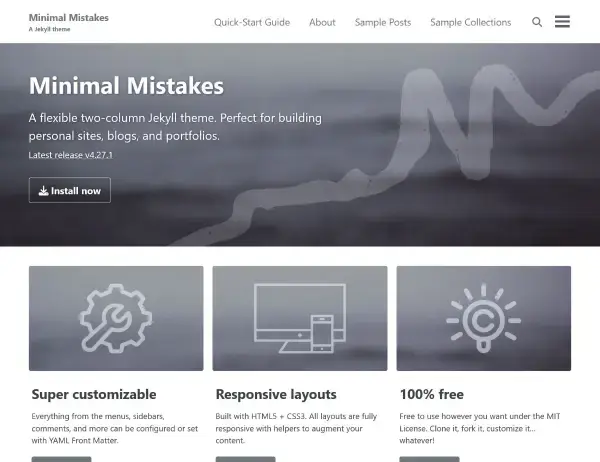
Minimal Mistakes Jekyll Theme
A minimal, flexible Jekyll blog theme for writing, publishing, and content-led personal sites.
Blog themes
Jekyll blog themes with clean typography and fast pages, for personal blogs, company news, documentation, and content-led websites.
Michael Rose · Free
A minimal, flexible Jekyll blog theme for writing, publishing, and content-led personal sites.
Reading comes first. Look for comfortable line lengths, strong typography, and a layout that stays clean when posts get long. Then check what your blog needs beyond posts: categories and tags, an archive, author pages, comments, and search.
Personal blogs and documentation suit Minimal Mistakes, one of the most popular Jekyll themes ever made, with nine skins, multiple layouts, and built-in comment and analytics support. Company blogs that sit alongside a business website suit our corporate themes, which pair service and team pages with a full blog.
Each post is a Markdown file in the _posts folder, named with its date, like 2026-10-27-my-first-post.md. Front matter at the top sets the title, description, image, and tags; Jekyll handles the rest, including the post page, listings, RSS feed, and sitemap.
Moving from WordPress? Read our guide to migrating from WordPress to Jekyll without losing your search rankings.
Posts are plain Markdown files, so writing is distraction-free and every change is versioned in Git. Jekyll builds them into fast, secure static pages you can host for free on GitHub Pages.
Yes. Export your posts with the Jekyll Exporter plugin or the jekyll-import gem, keep your URL structure, and add redirects for anything that changes. Our WordPress to Jekyll guide walks through every step.
Yes, through embedded services. Minimal Mistakes has built-in support for Disqus, utterances, and giscus, and any theme can add giscus with a small snippet.
Yes. Static search tools like Pagefind or Lunr build an index of your posts at build time, so search works without a server.